
Boasts and angles · Advanced
How to play the back-wall emergency boast in squash.
See the representative arrival, strike, back wall, then front wall, first bounce, opponent cue and recovery for the back-wall emergency boast.
In short
Consider the back-wall emergency boast when the ball has passed you and cannot be reached safely in front, leaving the back wall as a last-resort route. Make a legal recovery, escape the back corner and keep the rally alive.
Watch the trajectory
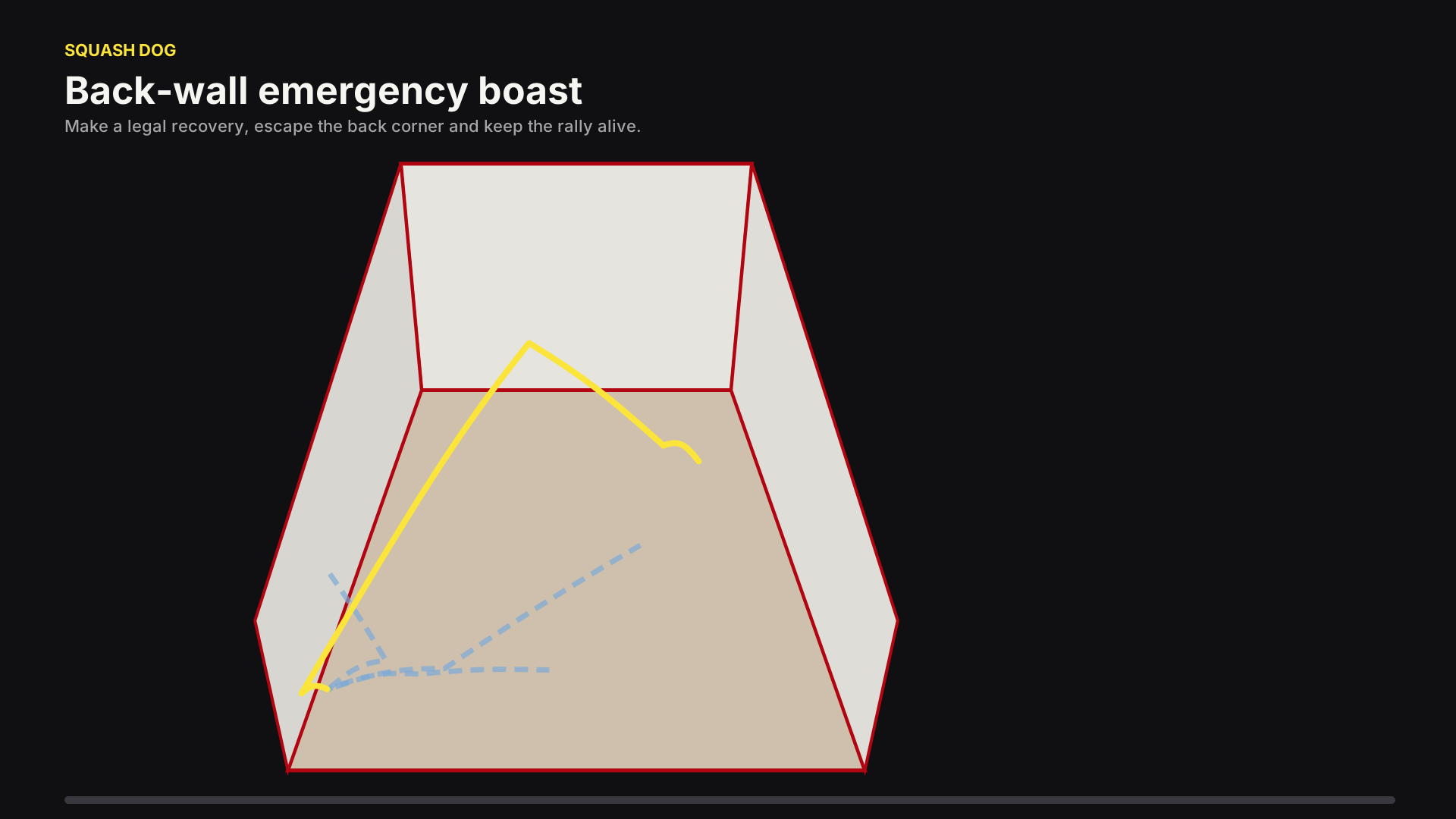
Blue dashed lines show realistic arrivals one at a time. Yellow shows the strike and outgoing path. The opponent and recovery zone provide tactical context. No players or rackets are shown.
Trajectory, in words
- The blue path or paths show how the ball can arrive before the strike.
- The yellow path reaches back wall, then front wall in numbered order.
- The first bounce enters the highlighted emergency recovery area; the recovery zone anticipates the likely reply.
Blue shows the representative arrival or alternatives converging on one strike. Yellow shows the straight or angled outgoing path for the back-wall emergency boast. Numbered contacts, the target, opponent position and recovery zone explain the tactical sequence.
Read the opportunity
When should I play it?
- The ball has passed you and cannot be reached safely in front, leaving the back wall as a last-resort route.
- You can reach the strike point in balance rather than forcing the shot.
- You have a clear view, direct access, a safe swing and an unobstructed intended ball line.
Opponent cue
Where should the opponent be?
The opponent controls the T and is likely to attack any ball that returns loose from the front wall.
Intention
What am I trying to achieve?
Make a legal recovery, escape the back corner and keep the rally alive.
Plan the next ball
What is likely to come back?
- An attacking drop
- A volley kill
- A firm length into the open court
Follow-up: Turn to face the court as soon as it is safe and prioritise balance for the next attack.
Where do I recover?
First escape the back corner; recover only as far towards the T as the emergency shot permits.
Common mistake
Trying the back wall when a safer conventional contact remains available.
Safety
Check the opponent, racket arc and rebound line carefully before attempting this emergency shot.
Sources and review
This is a source-aligned Squash Dog editorial illustration, reviewed 6 September 2026. It represents one useful pattern, not the only valid trajectory, a governing-body endorsement or personal coaching advice.