Boasts and angles · Intermediate
How to play a two-wall boast in squash.
See three realistic back-court arrivals, a low strike close to the sidewall and the two-wall path into the opposite front corner.
In short
Use a working two-wall boast when a tight back-court ball is awkward to drive straight and the opponent is behind or moving away from the opposite front corner.
Watch the trajectory
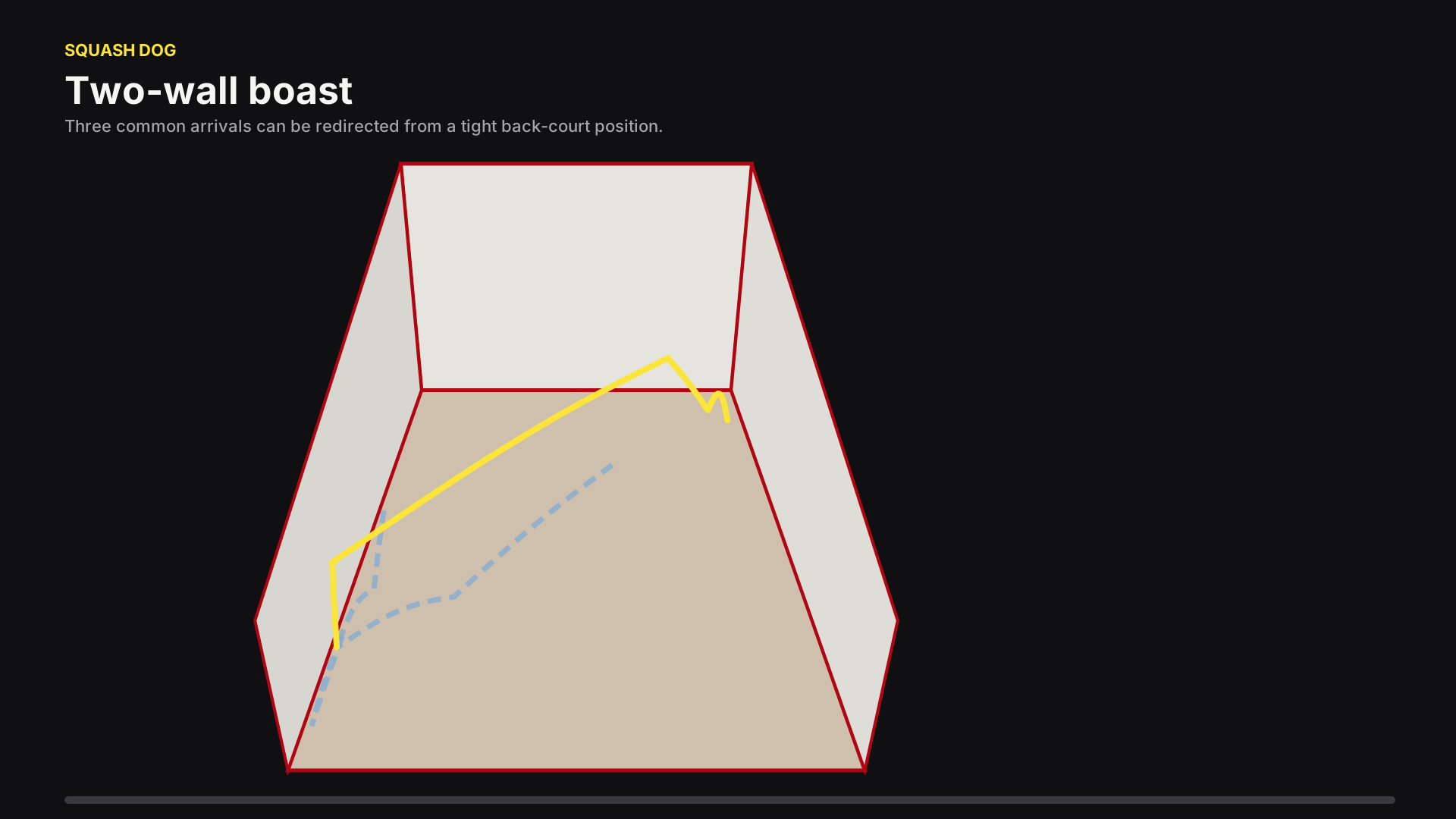
Blue dashed lines show realistic arrivals one at a time. Yellow shows the strike and outgoing path. The opponent and recovery zone provide tactical context. No players or rackets are shown.
Trajectory, in words
- Three common back-court arrivals meet the same tight strike point, one at a time.
- The ball hits the near sidewall first and then the front wall.
- It drops for its first floor bounce near the opposite front corner.
Three dashed blue arrivals show a tight straight length, cross-court length and back-wall rebound separately. All converge 28 centimetres from the right sidewall. A yellow strike marker appears, then the solid yellow path reaches the right sidewall, front wall and floor in numbered order. The opponent is deep and a forward recovery zone appears.
Read the opportunity
When should I play it?
- The ball is tight and low in the back corner, making straight length difficult.
- You can strike close to the sidewall without reaching across the ball.
- The opponent is deep, wrong-footed or moving away from the target front corner.
Opponent cue
Where should the opponent be?
The best opening is an opponent held deep or moving away from the front corner. If they are already forward and balanced, the boast may feed their attack.
Intention
What am I trying to achieve?
Bring the ball down quickly into the opposite front corner and force a long diagonal movement.
Plan the next ball
What is likely to come back?
- A counterdrop
- A cross-court lift
- A straight drive from the front
Follow-up: Treat it as a possible finisher, not a guaranteed winner. Move forward enough to cover the counterdrop while staying balanced for a lifted reply.
Where do I recover?
Clear the back corner, watch the opponent and recover to a forward-biased T position because the next contact is likely to be at the front.
Common mistake
Hitting too high or too loose, which lets the opponent attack rather than stretch.
Safety
A cramped back-court swing can be dangerous. Stop if you lack a clear swing or if the opponent has not cleared your path.
Sources and review
This is a source-aligned Squash Dog editorial illustration, reviewed 6 September 2026. It represents one useful pattern, not the only valid trajectory, a governing-body endorsement or personal coaching advice.