
Lobs and height · Intermediate
How to play a straight defensive lob in squash.
See three tight front-court arrivals, a low strike and a high, soft path that descends into the same-side back corner.
In short
Lift a straight lob from a low front-court ball when the opponent is forward, using height and softness to pass over them and create time to recover.
Watch the trajectory
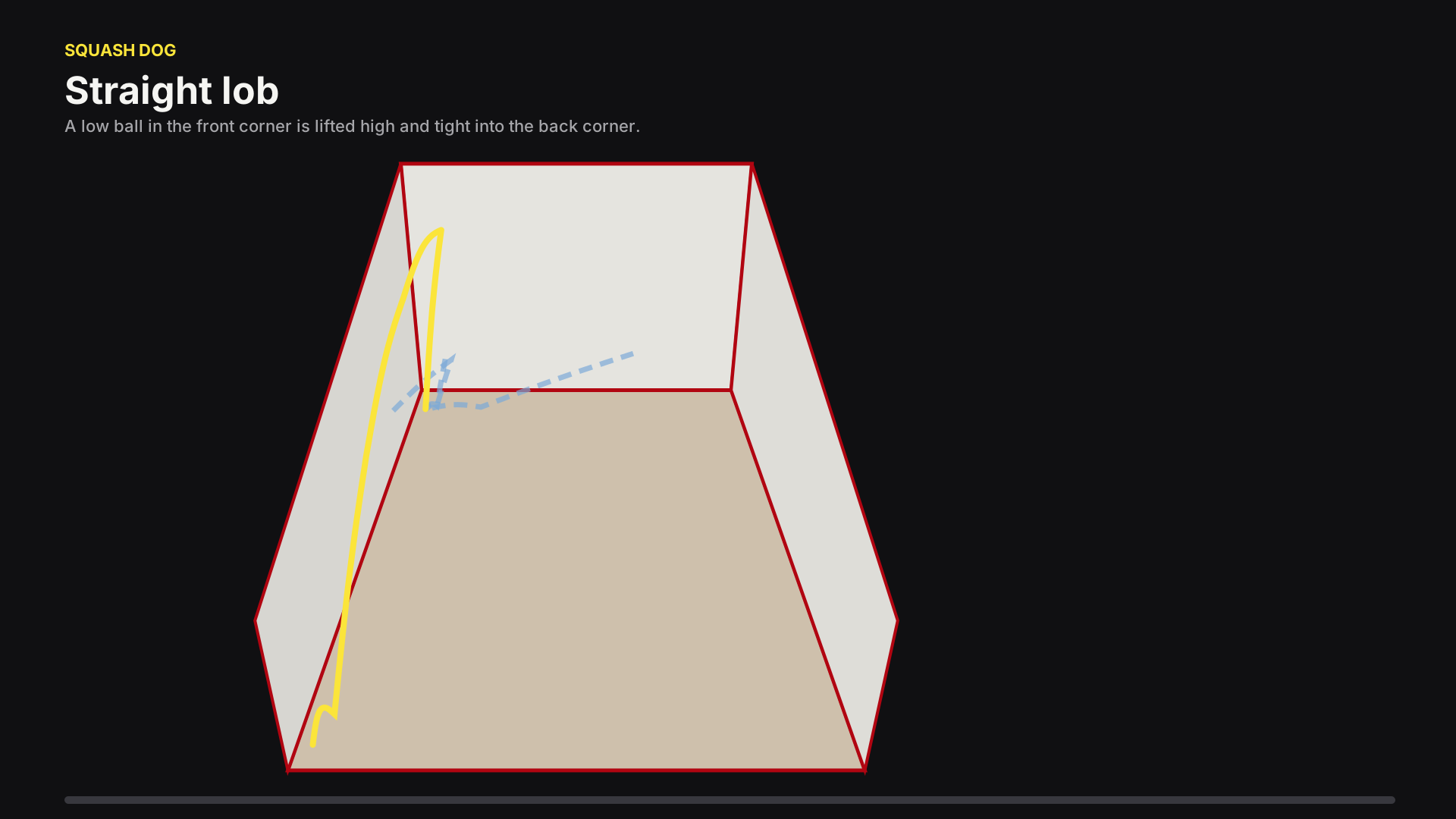
Blue dashed lines show realistic arrivals one at a time. Yellow shows the strike and outgoing path. The opponent and recovery zone provide tactical context. No players or rackets are shown.
Trajectory, in words
- Three realistic front-court arrivals meet the same low strike, one at a time.
- Lift softly to a high front-wall contact while keeping the path near the sidewall.
- The ball arcs over the opponent and descends steeply into the same-side back corner.
A straight drop, cross-court drop and soft boast are shown separately as dashed blue approaches to a strike 32 centimetres from the right sidewall. The opponent is forward. The solid yellow path rises to a high front-wall contact, arcs above the court and descends steeply into the highlighted back-right target area. A central recovery zone appears.
Read the opportunity
When should I play it?
- The ball is low and tight in the front corner.
- You need time more than immediate attack.
- The opponent has moved forward and a high ball can pass over their volley reach.
Opponent cue
Where should the opponent be?
The best cue is an opponent committed forward. If they remain balanced behind the service line, a loose lob may be intercepted.
Intention
What am I trying to achieve?
Create recovery time, move the opponent behind you and reverse front-court pressure.
Plan the next ball
What is likely to come back?
- A straight length from the back
- A defensive boast
- A volley if the lob is too low or central
Follow-up: Use the extra flight time to recover, then prepare for a back-court length or boast. A strong opponent may still volley a loose lob.
Where do I recover?
Clear the front corner and move towards a balanced T position while the ball is high, preserving the opponent's direct route behind you.
Common mistake
Hitting too low, too hard or too centrally, which creates a comfortable volley or a loose back-wall rebound.
Safety
Do not lift through an opponent who is directly in the ball's path. Stop if you lack a safe line or clear swing.
Sources and review
This is a source-aligned Squash Dog editorial illustration, reviewed 6 September 2026. It represents one useful pattern, not the only valid trajectory, a governing-body endorsement or personal coaching advice.