
Drives and lengths · Beginner
How to play a straight attacking length in squash.
See three loose arrivals, a balanced mid-court strike and a straight length whose first bounce dies deep beside the sidewall.
In short
Play a straight attacking length from a balanced mid-court ball when you can keep it tight and make the first bounce land deep, moving the opponent behind you.
Watch the trajectory
Blue dashed lines show realistic arrivals one at a time. Yellow shows the strike and outgoing path. The opponent and recovery zone provide tactical context. No players or rackets are shown.
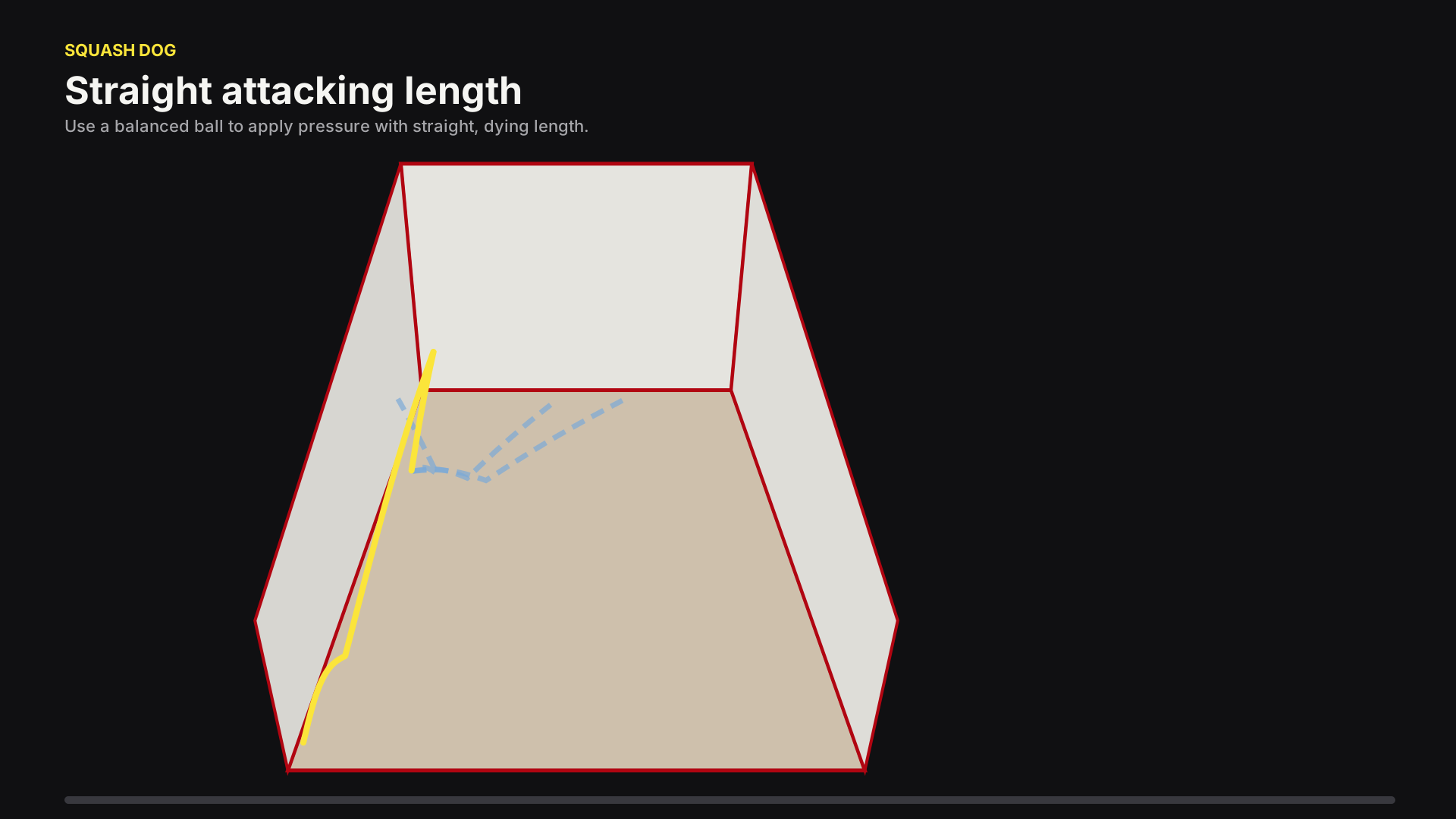
Trajectory, in words
- Three loose arrivals converge separately on the same balanced strike.
- Hit the front wall with controlled pace and enough width to find the sidewall.
- Make the first bounce deep so the ball loses pace near the back corner.
A loose cross-court, recovered boast and central return appear separately as dashed blue arrivals. They meet at a low-to-medium strike near the right wall. The solid yellow drive reaches the front wall and first bounces deep beside the same wall. The opponent is shown across court and a central recovery zone appears.
Read the opportunity
When should I play it?
- The ball is loose enough to strike in balance around mid-court.
- You can hit straight without forcing the ball through the middle.
- The opponent is outside the best interception line or recovering from the previous corner.
Opponent cue
Where should the opponent be?
Ideally the opponent is across court or still recovering. If they are set on the T with a clear volley, improve the width or choose a safer target.
Intention
What am I trying to achieve?
Keep the ball tight, move the opponent behind you and seek a shorter or looser reply.
Plan the next ball
What is likely to come back?
- A straight length under pressure
- A defensive cross-court
- A boast from behind
Follow-up: Expect the rally to continue. Look to take a loose cross-court early or cover the boast while retaining the straight channel.
Where do I recover?
Clear your direct line, watch the opponent and settle near the T, shaded slightly towards the side of the expected reply.
Common mistake
Bouncing too early or leaving too much gap from the sidewall, creating a comfortable volley or back-wall rebound.
Safety
Recover around the opponent's access line, not through it. Stop if your movement or their swing would create interference.
Sources and review
This is a source-aligned Squash Dog editorial illustration, reviewed 6 September 2026. It represents one useful pattern, not the only valid trajectory, a governing-body endorsement or personal coaching advice.