
Serves and returns · Beginner
How to play a straight deep return in squash.
See three common serve arrivals, the shared strike point and a straight return that stays tight and reaches the back of the court.
In short
Return the serve straight and deep when you can strike in balance near the sidewall, reducing the server's volleying options and giving yourself room to leave the back corner.
Watch the trajectory
Blue dashed lines show realistic arrivals one at a time. Yellow shows the strike and outgoing path. The opponent and recovery zone provide tactical context. No players or rackets are shown.
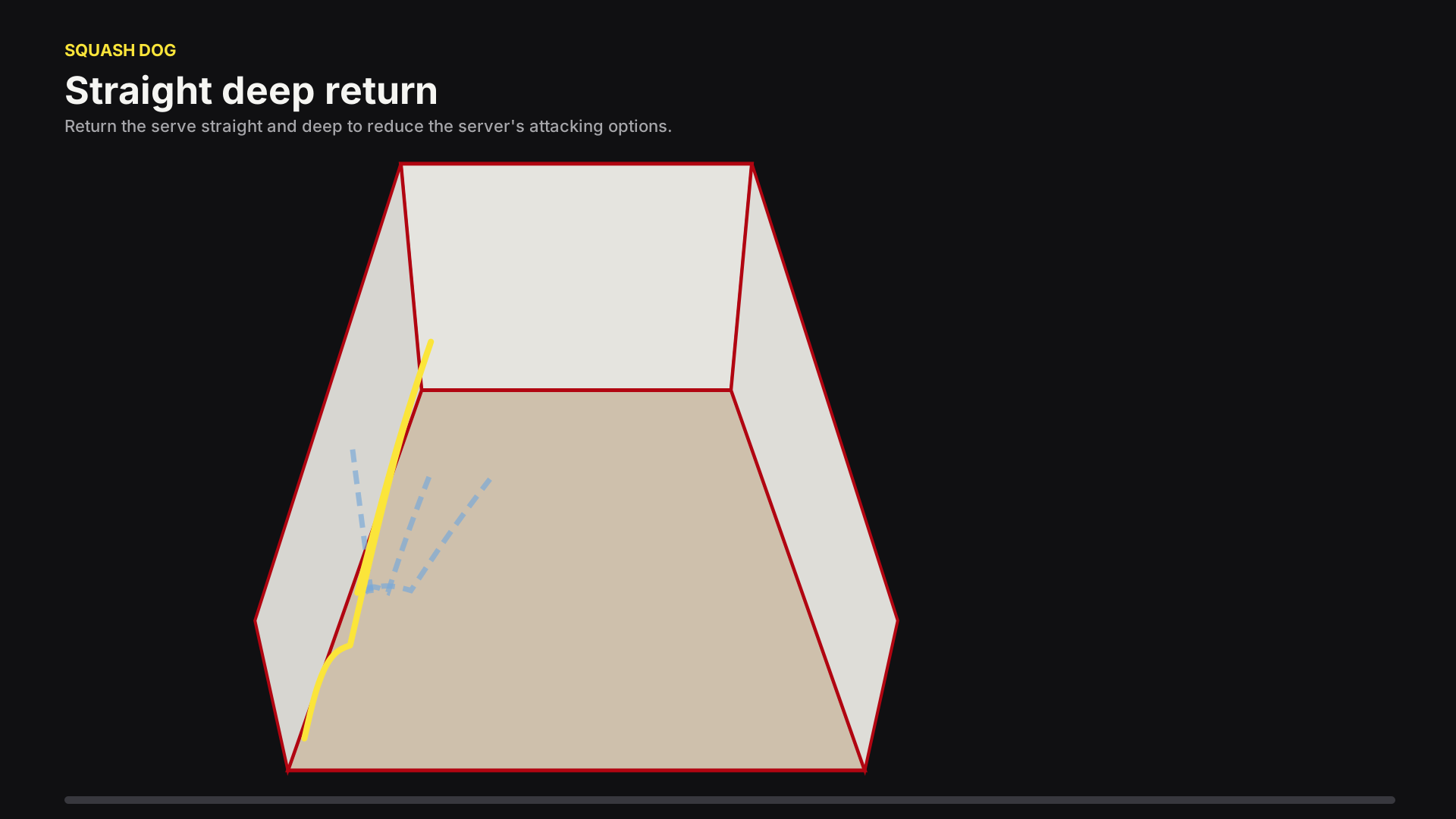
Trajectory, in words
- Three representative serves arrive one at a time at the same back-court strike point.
- Strike after the bounce, close to the sidewall.
- Send the ball to the front wall and keep its first bounce deep on the same side.
A lob serve, firm serve and body-line serve are shown separately as dashed blue approaches to one low-to-medium strike near the back-right wall. A solid yellow return reaches the front wall, then bounces deep and stays tight. The server is marked near the T and a central recovery zone appears after the strike.
Read the opportunity
When should I play it?
- The serve has reached the back quarter and you can strike without crowding the wall.
- You are balanced enough to control direction and depth.
- A cross-court return would give the server an easier interception.
Opponent cue
Where should the opponent be?
The server is moving towards the T and looking to volley. A tight straight return makes that interception harder.
Intention
What am I trying to achieve?
Move the server behind you, limit the attacking volley and create time to clear the back corner.
Plan the next ball
What is likely to come back?
- A straight length from the back corner
- A cross-court escape
- A boast under pressure
Follow-up: Watch the opponent and be ready to volley a loose cross-court or cover a boast, rather than assuming the return has ended the rally.
Where do I recover?
Clear the back corner safely, watch the ball and move towards a balanced T position that still covers the likely straight reply.
Common mistake
Leaving the return away from the sidewall, which lets the server volley from the T.
Safety
Do not force a swing when the server has not cleared. Stop and ask for a let if access, view or swing is unsafe.
Sources and review
This is a source-aligned Squash Dog editorial illustration, reviewed 6 September 2026. It represents one useful pattern, not the only valid trajectory, a governing-body endorsement or personal coaching advice.