
Boasts and angles · Advanced
How to play the corkscrew-style boast in squash.
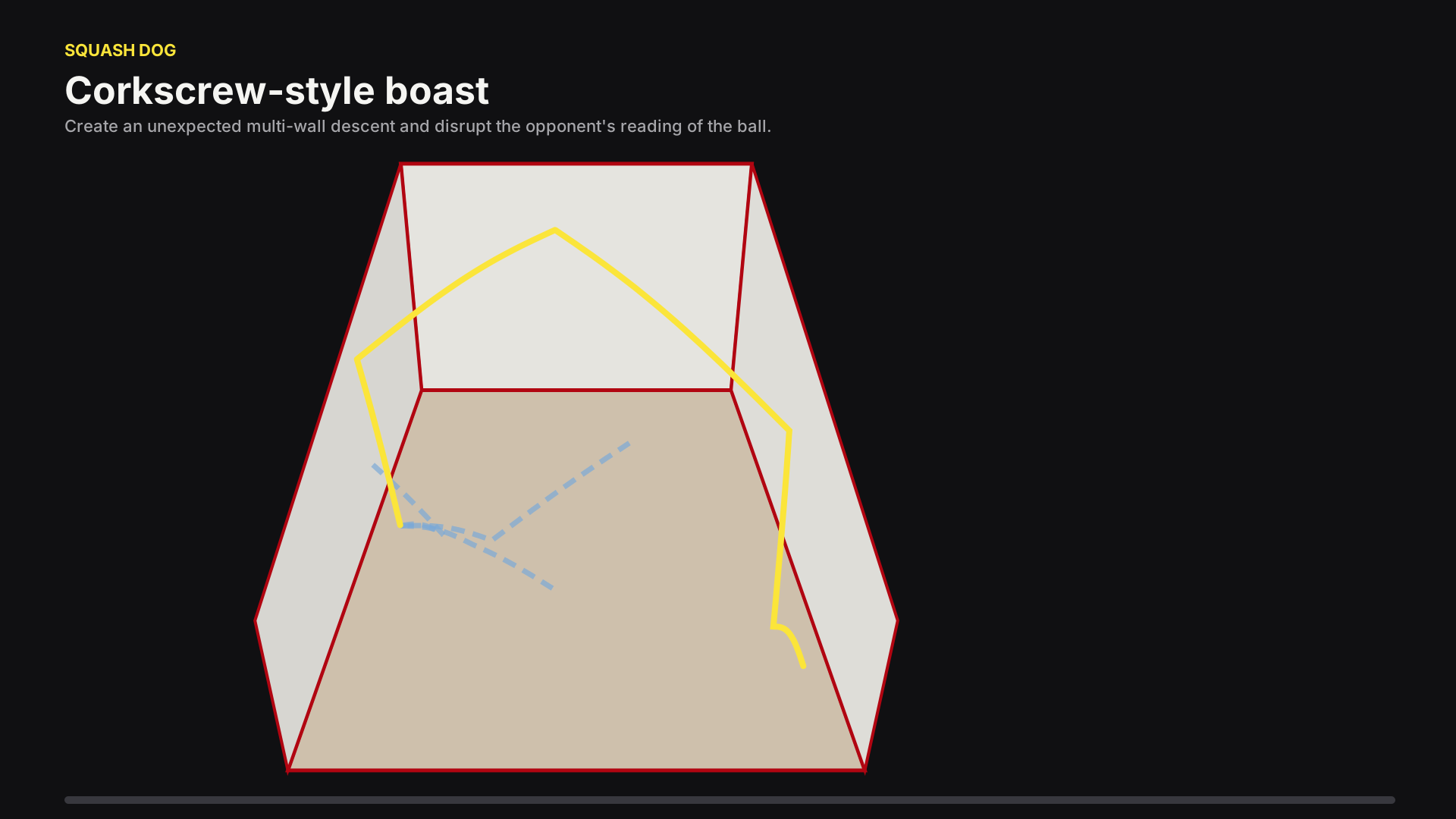
See the representative arrival, strike, high side wall, then high front wall, then opposite side wall, first bounce, opponent cue and recovery for the corkscrew-style boast.
In short
Consider the corkscrew-style boast when an expert player has time, balance and a safe multi-wall route to use height and surprise. Create an unexpected multi-wall descent and disrupt the opponent's reading of the ball.
Watch the trajectory
Blue dashed lines show realistic arrivals one at a time. Yellow shows the strike and outgoing path. The opponent and recovery zone provide tactical context. No players or rackets are shown.
Trajectory, in words
- The blue path or paths show how the ball can arrive before the strike.
- The yellow path reaches high side wall, then high front wall, then opposite side wall in numbered order.
- The first bounce enters the highlighted multi-wall descent; the recovery zone anticipates the likely reply.
Blue shows the representative arrival or alternatives converging on one strike. Yellow shows the straight or angled outgoing path for the corkscrew-style boast. Numbered contacts, the target, opponent position and recovery zone explain the tactical sequence.
Read the opportunity
When should I play it?
- An expert player has time, balance and a safe multi-wall route to use height and surprise.
- You can reach the strike point in balance rather than forcing the shot.
- You have a clear view, direct access, a safe swing and an unobstructed intended ball line.
Opponent cue
Where should the opponent be?
The opponent is committed to a conventional line and may be wrong-footed by the unusual high route.
Intention
What am I trying to achieve?
Create an unexpected multi-wall descent and disrupt the opponent's reading of the ball.
Plan the next ball
What is likely to come back?
- A lifted recovery
- A straight drive
- A counterattack if the ball sits up
Follow-up: Recover centrally and assume the rally continues until the ball is visibly dead.
Where do I recover?
Take a balanced central position that covers either a short fall or deeper rebound.
Common mistake
Treating an exhibition variation as a percentage choice under ordinary pressure.
Safety
This expert variation requires ample clearance and should be learned with a qualified coach.
Sources and review
This is a source-aligned Squash Dog editorial illustration, reviewed 6 September 2026. It represents one useful pattern, not the only valid trajectory, a governing-body endorsement or personal coaching advice.