
Drives and lengths · Intermediate
How to play the straight defensive volley length in squash.
See the representative arrival, strike, front wall, first bounce, opponent cue and recovery for the straight defensive volley length.
In short
Consider the straight defensive volley length when a controllable airborne ball would otherwise push you backwards, and height can retain the middle. Keep the ball straight, high and deep while preserving your central position.
Watch the trajectory
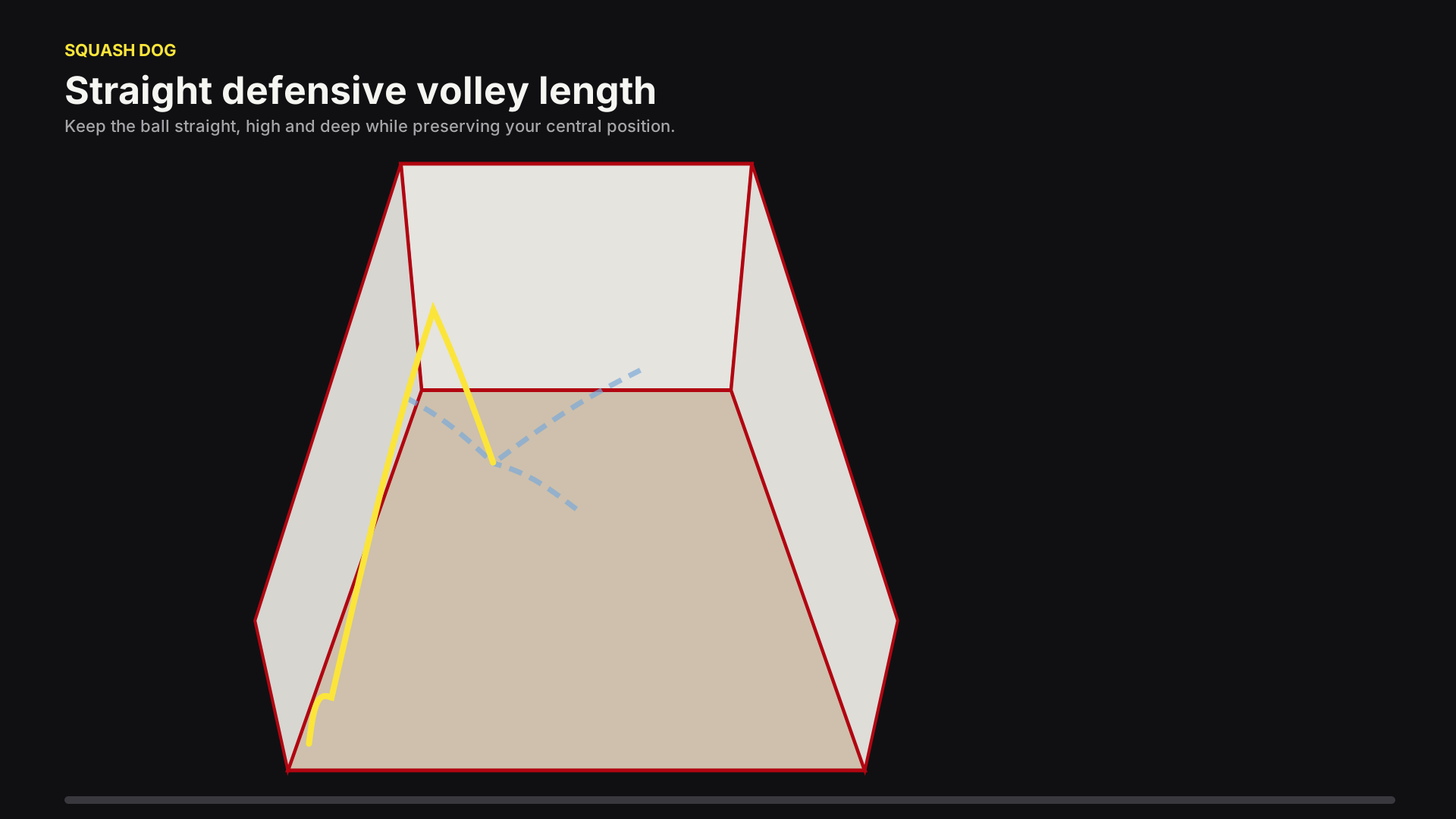
Blue dashed lines show realistic arrivals one at a time. Yellow shows the strike and outgoing path. The opponent and recovery zone provide tactical context. No players or rackets are shown.
Trajectory, in words
- The blue path or paths show how the ball can arrive before the strike.
- The yellow path reaches front wall in numbered order.
- The first bounce enters the highlighted deep length target; the recovery zone anticipates the likely reply.
Blue shows the representative arrival or alternatives converging on one strike. Yellow shows the straight or angled outgoing path for the straight defensive volley length. Numbered contacts, the target, opponent position and recovery zone explain the tactical sequence.
Read the opportunity
When should I play it?
- A controllable airborne ball would otherwise push you backwards, and height can retain the middle.
- You can reach the strike point in balance rather than forcing the shot.
- You have a clear view, direct access, a safe swing and an unobstructed intended ball line.
Opponent cue
Where should the opponent be?
The opponent is recovering behind you and may attack if the volley separates from the wall.
Intention
What am I trying to achieve?
Keep the ball straight, high and deep while preserving your central position.
Plan the next ball
What is likely to come back?
- A straight return from the back
- A boast
- A volley if the shot is loose
Follow-up: Stay balanced rather than drifting forward, and prepare for a back-court reply.
Where do I recover?
Hold a central base near the T and watch the opponent's options from behind.
Common mistake
Flattening a defensive volley and giving the opponent a comfortable counter-volley.
Safety
Do not stretch across the opponent's line merely to take the ball early.
Sources and review
This is a source-aligned Squash Dog editorial illustration, reviewed 6 September 2026. It represents one useful pattern, not the only valid trajectory, a governing-body endorsement or personal coaching advice.